Community Health Worker Billing and Reimbursement
Navigating the Landscape: Medicare, Medicaid, Sustainability and Beyond
Community health worker (CHW) and patient navigation programs are funded by various sources that vary across state and region. Building programs with blended funding streams is important to the long-term sustainability of this workforce.
Some states provide Medicaid payments for certain CHW services. In 2004, Medicare introduced the first billing code for CHW services in the Physician Fee Schedule.
Watch: Alliance Summer 2026 Network Check-In webinar, hosted on June 11, 2026. This session was focused on the latest updates to support sustainability and reimbursement of CHWs, PNs, and PdS roles in Colorado. The slides and recording can be accessed on the Webinar and Events page of The Alliance’s website.

Patient Navigation Sustainability Assessment Tool (PNSAT)
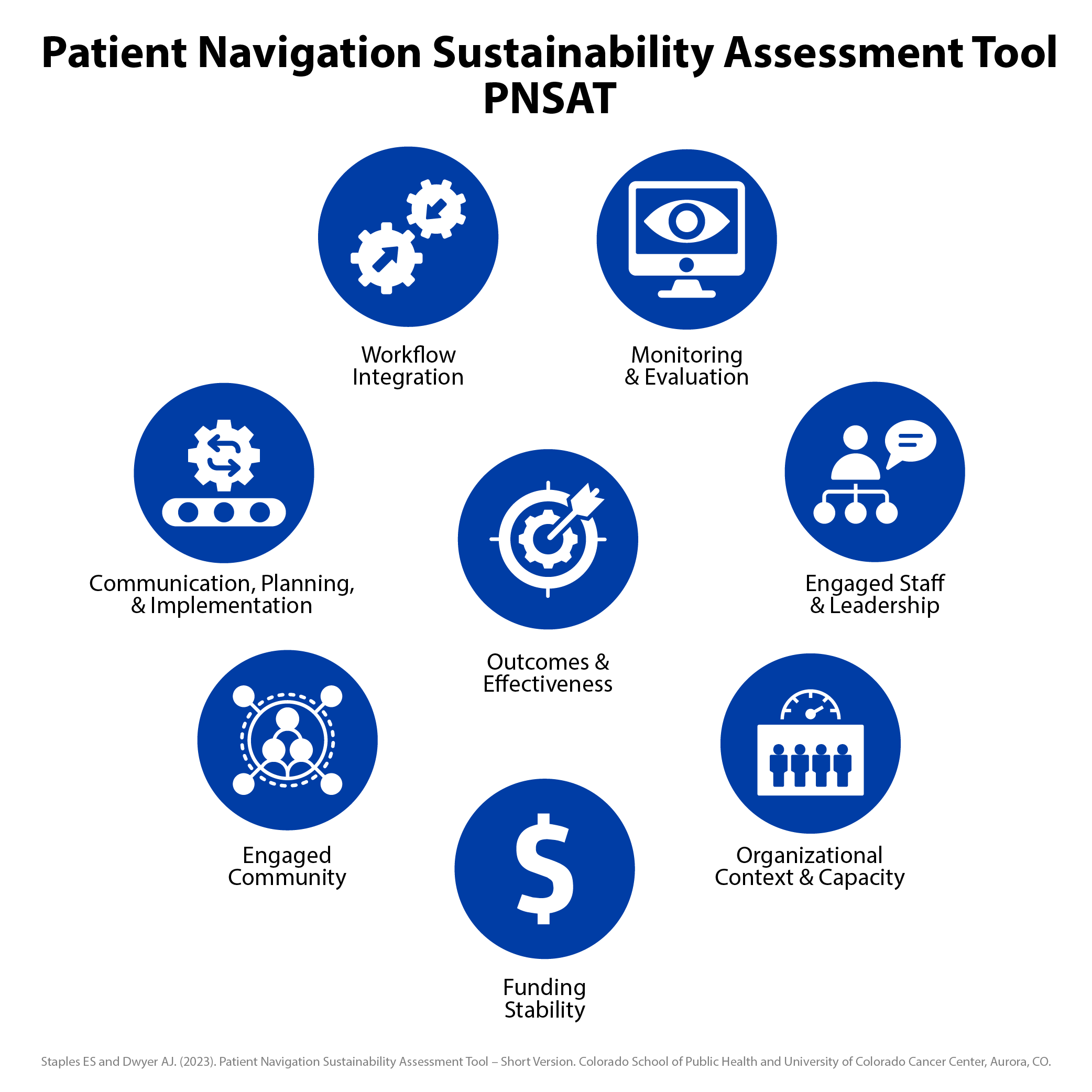
The Patient Navigation Sustainability Assessment Tool (PNSAT) is a resource designed to enhance the effectiveness and sustainability of navigation programs. The PNSAT framework measures sustainability across eight critical domains, including financial stability, workflow integration, and the engagement of both leadership and the community. By providing a structured scoring system and action plan, the PNSAT helps program planners understand how navigation services impact clinical outcomes. By utilizing the PNSAT, programs can better understand their program’s strengths and areas for improvement.
8 PNSAT Domains
Medicare reimbursement for CHWs
Medicare will pay for services delivered by CHWs under the supervision of a Medicare billing provider. The 2004 Physician Fee Schedule introduced reimbursement for Community Health Integration (CHI) and Principal Illness Navigation (PIN) services.
- CHI: Supportive services provided to patients with upstream drivers (such as food, housing or transportation needs) that present barriers to diagnosis, treatment, or self-management of illness or disease.
- PIN: Supportive services provided to patients with a high-risk or chronic condition and healthcare navigation needs.
Training requirements: To qualify for Medicare reimbursement, CHWs must meet their state’s requirements for training and credentialing. If their state does not have CHW requirements, they must be trained on core competencies such as communication, service coordination and systems navigation, professionalism, ethical conduct, and knowledge of local resources. PNCT provides this core competency training, contact us for details.
Reimbursement Tips: Principal Illness Navigation This guide from the National Association of Community Health Centers reviews the purpose and scope of PIN services and will help you apply correct coding, billing, and documentation rules.
Reimbursement Tips: Community Health Integration This guide from the National Association of Community Health Centers reviews the purpose and scope of CHI services and will help you apply correct coding, billing, and documentation rules.
Medicaid reimbursement for CHWs
Many states allow for CHW services to be reimbursed by Medicaid. Examples of covered services include health system navigation, resource coordination, and health coaching.
In Colorado, Senate Bill 23-002 was passed in 2023 to add CHW services as a Health First Colorado benefit (Colorado’s Medicaid program). Unfortunately, due to Colorado’s budget crisis, implementation of CHW reimbursement has been delayed until Jan. 1, 2028.
Training requirements: Requirements will vary by state. In Colorado, in order to be eligible for CHW reimbursement once it goes live, CHWs have to be credentialed and listed on the state of Colorado CHW registry.
Key Links:
- Colorado Department of Health Care Policy & Financing
- CHW Fact Sheet
- Explore efforts in other states: Minnesota CHW Billing and Reimbursement

How to Become a Credentialed CHW
There are currently three pathways to becoming a credentialed CHW in Colorado: training pathway, work experience pathway and community health representative pathway.
The training pathway and the work experience pathway require CHWs to pass an assessment to earn their credential.
CHW Training Pathways
| Pathway | Description |
| Colorado Training Pathway |
|
| Work Experience Pathway |
|
| Community Health Representative Pathway |
|
| Reciprocity Pathway |
Under development |
Full details available on the Colorado Department of Public Health and Environment website.
Sustainability Resources
CHW Financial Sustainability Toolkit
The CHW Financial Sustainability Toolkit, developed in collaboration with national experts, is a comprehensive resource designed to help CHWs and CHW allies plan for and achieve long-term financial sustainability.
Building and Sustaining CHW Programs
This resource center has tools, research, and guidance to support design, implementation, and sustainability of CHW programs. It was developed for California but many of the resources are useful for other states.
Rural Community Health Workers Toolkit
This toolkit from the Rural Health Information Hub compiles evidence-based models, promising practices, and resources to support rural communities seeking to develop CHW programs.
Funding provided by the Cancer, Cardiovascular and Pulmonary Disease Grant Program.